
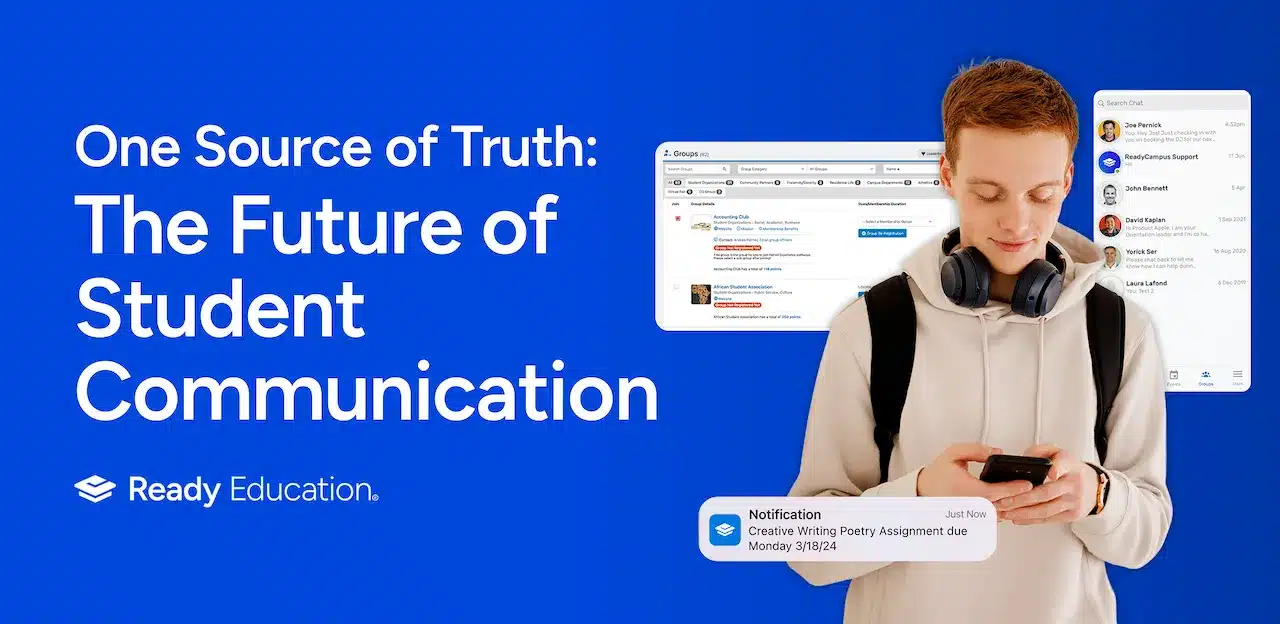
Higher education institutions are communicating with students more than ever before. Important updates arrive through countless channels, including email, text, mobile apps, learning management systems (LMS), department newsletters, and social media.
Yet despite the volume of outreach, many students still feel they are missing key information. This challenge becomes even more acute during disruptions, such as severe weather closures, public health emergencies, cyber incidents, or broader crises, when clear and coordinated communication is essential.
The issue is rarely a lack of communication, but rather a lack of coordination. When your institution spreads messages across disconnected systems, students are left to piece together information on their own. Team members duplicate their efforts, important updates get buried, and institutions lose visibility into what messages went out, who received them, and whether students are engaging.
More institutions are combating this issue by prioritizing centralized student communications and creating a single source of truth through a student engagement platform. A centralized approach not only improves day-to-day operations but also strengthens student belonging and institutional trust.
The Problem with Fragmented Student Communications
Many institutions have added communication tools over time to solve individual needs. One platform handles email. Departments run separate newsletters. Student services post updates elsewhere. The LMS carries academic notices. Social channels share campus news.
Individually, each tool may serve a purpose. Together, they often create confusion.
When communications are fragmented:
- Students miss important updates, deadlines, and events.
- Staff members repeat work across multiple systems.
- Messaging becomes inconsistent across departments.
- Reporting and measurement are difficult.
- Students feel less connected to campus life.
For students, confusion can turn into disengagement. When students do not know where to go for reliable information, they are less likely to participate, respond, or seek support. This is especially true for first-years, commuters, and online learners.
Why One Source of Truth Matters
A single source of truth for student communication means students know exactly where to go for trusted, timely, relevant information. It also means staff can manage outreach, engagement, and reporting from one unified platform. This matters every day, and especially during emergencies.
When your institution centralizes communications, you gain three major advantages:
1. Better Student Engagement
Students are more likely to open, read, and act on communications when messages are relevant, timely, and delivered through channels they already use. Instead of broadcasting the same message to everyone, institutions can target communications by student type, program, year, campus, or interests.
That means:
- First-year students receive onboarding support.
- Commuters receive campus access updates.
- Online learners receive digital engagement opportunities.
- Seniors receive graduation and career information.
Relevant communication drives participation and helps students feel seen.
2. Greater Operational Efficiency
Managing multiple disconnected systems creates unnecessary administrative work for your institution’s teams.
A centralized student engagement platform allows teams to manage the following communications, all from one place:
- Email campaigns.
- Push notifications.
- Newsletters.
- Events promotion.
- Surveys and forms.
- Chat and two-way messaging.
- Community announcements.
Centralization reduces manual work, improves coordination across departments, and gives staff more time to focus on student success rather than managing tools.
3. Clearer Reporting and Accountability
Institutional leaders increasingly need data to measure engagement, demonstrate impact, and support accreditation or compliance reviews.
With one platform, your team can see:
- What messages were sent.
- Which students received them.
- Open and click-through rates.
- Event engagement trends.
- Response rates.
- Communication history across channels.
That visibility is difficult to achieve when your communications live across separate systems.
Why Centralized Communication Becomes Essential During Disruption
While centralized communication improves everyday operations, its value becomes even clearer during periods of uncertainty. When campuses must pivot quickly, whether it’s because of snowstorms, public health concerns, local emergencies, cybersecurity incidents, or geopolitical conflict, students need immediate, consistent information.
They need to know:
- Is campus open?
- Are classes remote?
- Are support services available?
- Are events canceled?
- What actions should I take now?
If updates come from multiple systems or conflicting channels, confusion spreads quickly. With a centralized communication platform, your institution can respond faster and with greater confidence. You can send coordinated updates across push notifications, email, chat, and community feeds from a single trusted source.
In moments of disruption, communication becomes more than an operational task. It strengthens student support and institutional resilience.
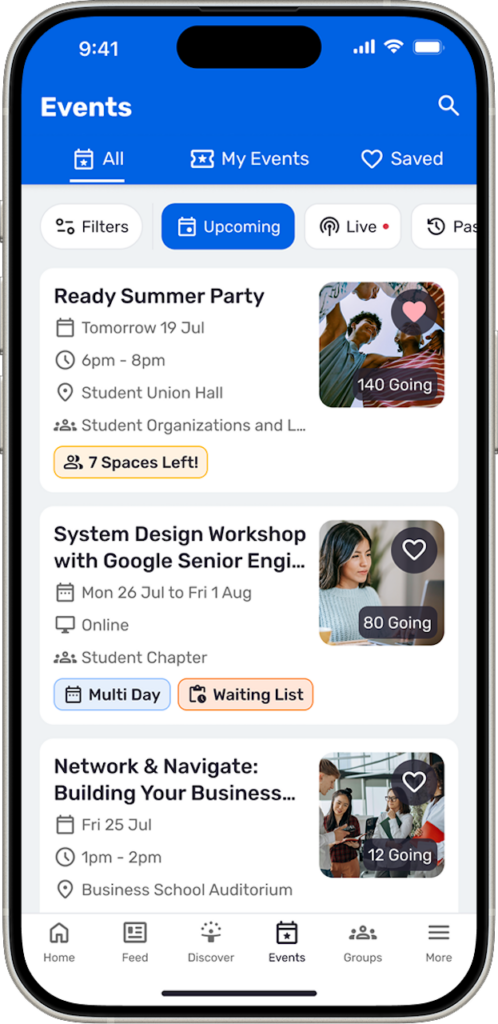
Supporting Online and Remote Students
For online and hybrid students, digital communication is often their primary connection to the institution.
Remote students do not pass posters in hallways or hear announcements on campus. Their sense of belonging depends on digital touch-points, making centralized communication especially important in serving online students.
A unified platform can give remote students equal access to:
- Events and activities.
- Clubs and communities.
- Peer connection opportunities.
- Timely support resources.
- Personalized updates.
- Campus-wide announcements.
For these students, digital communication is central, not secondary to the student experience.
Communication Is a Retention Strategy
Student communication is often viewed as an administrative function. In reality, it is closely tied to retention and success. Research from Complete College America finds that highly engaged students are 38% more likely to graduate within 6 years.
When students feel informed, they feel more confident navigating campus life. When they feel confident, they are more likely to engage. When they engage, they are more likely to persist.
Clear, coordinated communication helps students meet deadlines, access support, attend events, build relationships, and stay connected to their institution.
That is why the most forward-thinking institutions treat communication as a strategic pillar of student engagement.
How a Student Engagement Platform Helps
Student engagement platforms like CampusGroups enable institutions to centralize communication and engagement in one digital environment. By creating a single source of truth, they connect students to information, opportunities, communities, and support—through the channels they prefer.
Whether serving 3,000 students or 50,000 across multiple campuses, this approach improves operational efficiency while delivering a more cohesive student experience.
Students experience an entire institution, not just individual departments. Your communication strategy should reflect that. Moving from fragmented outreach to a unified communication ecosystem helps institutions streamline operations, build trust, and strengthen community and belonging every day.
Looking to improve student communication and engagement?
Improve student communication, strengthen engagement, and create a single source of truth with CampusGroups.
Learn more about CampusGroups or Request a Demo now.