-1740583686.svg "Ready Education")
New Financial Rewards Fuel Student Engagement at Lynn University
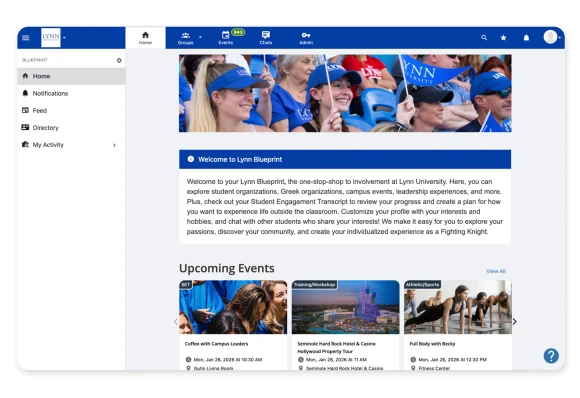
Lynn University is rethinking how student involvement drives success amid rising financial pressures. Through Blueprint Rewards, powered by Blueprint—the university’s campus community platform built on CampusGroups—Lynn connects student engagement to financial support and career readiness. Launched in 2026, the program reduces barriers, builds skills beyond the classroom, and strengthens student connection.

About Lynn University
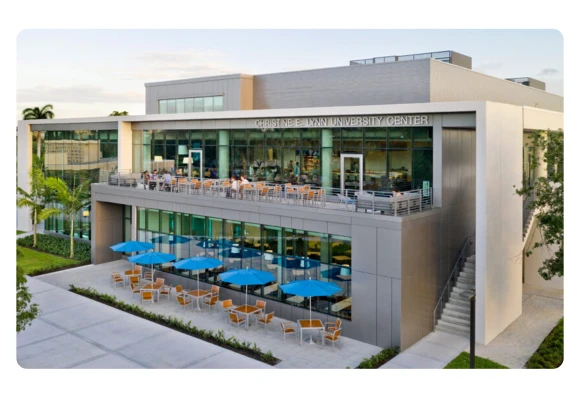
Lynn University is a private institution known for its student-centered, forward-thinking approach to higher education. With a strong emphasis on experiential learning, co-curricular involvement, and career readiness, Lynn continually explores new ways to support student success. The university prioritizes innovation not only in the classroom, but across the full student journey.
Outcomes
Since implementing Blueprint in 2023, the university has expanded student engagement and participation in co-curricular activities, building on a digital badging program launched in 2021 that drove a 65% increase in co-curricular engagement. Strengthened through CampusGroups, Blueprint Rewards, launched in January 2026, extends this momentum by linking student involvement to financial support and career readiness. Student outcomes include:
Challenges
Like many institutions nationwide, Lynn identified financial stress, rising costs, and time constraints as major barriers to student participation in co-curricular activities. At the same time, research consistently links engagement and belonging to academic success and persistence. Students who participate in extracurricular activities are more likely to feel connected, build leadership and communication skills, and clarify career goals.
The challenge was clear: how to encourage meaningful involvement without forcing students to choose between work and campus life.
Solutions
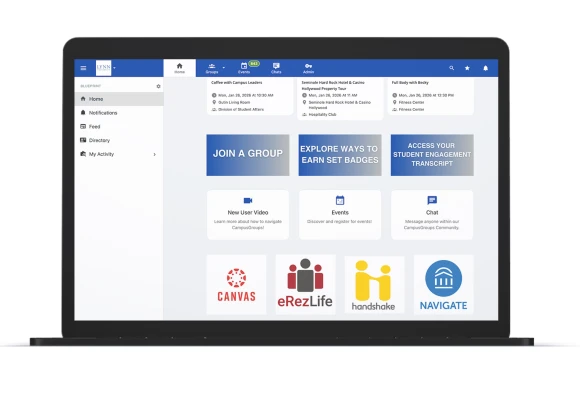
Lynn University is enhancing engagement by using CampusGroups to launch Blueprint Rewards, a points-based program that places tangible value on student involvement. The program aligns student success goals with institutional priorities around retention, persistence, and career outcomes.
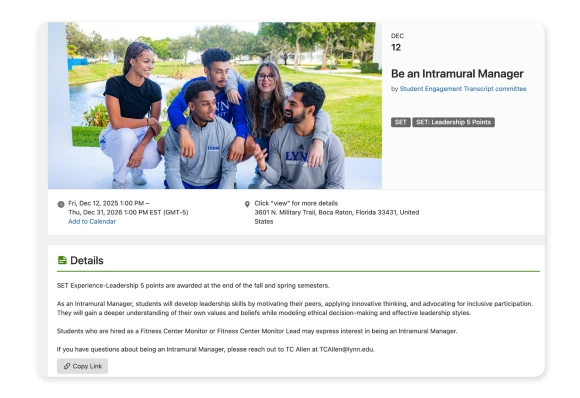
Within Blueprint, select campus activities are designated as points-bearing. Students earn points by participating in experiences aligned to six NACE-inspired career competencies, including leadership, collaboration, adaptability, and growth mindset. Reaching set thresholds unlocks digital badges and scholarship dollars applied toward future tuition.
CampusGroups powers the program end to end, enabling Lynn to:
Centralize engagement activities, tracking, and rewards.
Increase visibility into co-curricular opportunities.
Connect involvement to measurable student success outcomes.
Scale incentives with clarity and consistency.
As a result, Blueprint Rewards is expected to further:
Increase participation across campus activities.
Reduce financial barriers to involvement.
Link engagement to career readiness.
Support retention through forward-looking financial incentives.
By tying engagement to both financial wellness and career preparation, Lynn transformed participation into opportunity. CampusGroups enables the university to address disengagement at scale while maintaining a personalized, outcomes-driven approach.
Conclusion
Lynn University’s approach reflects a broader shift in higher education. Engagement is no longer optional—it is closely linked to student success, financial wellness, and long-term outcomes.
Blueprint Rewards has created a scalable, sustainable model that addresses disengagement while preparing students for life beyond graduation. The university continues to find new ways to leverage its student engagement platform, reinforcing connection, belonging, and opportunity at every stage of the student journey.