
Home Success Stories Spelman College
Success Story

Future-Ready Engagement at Spelman College

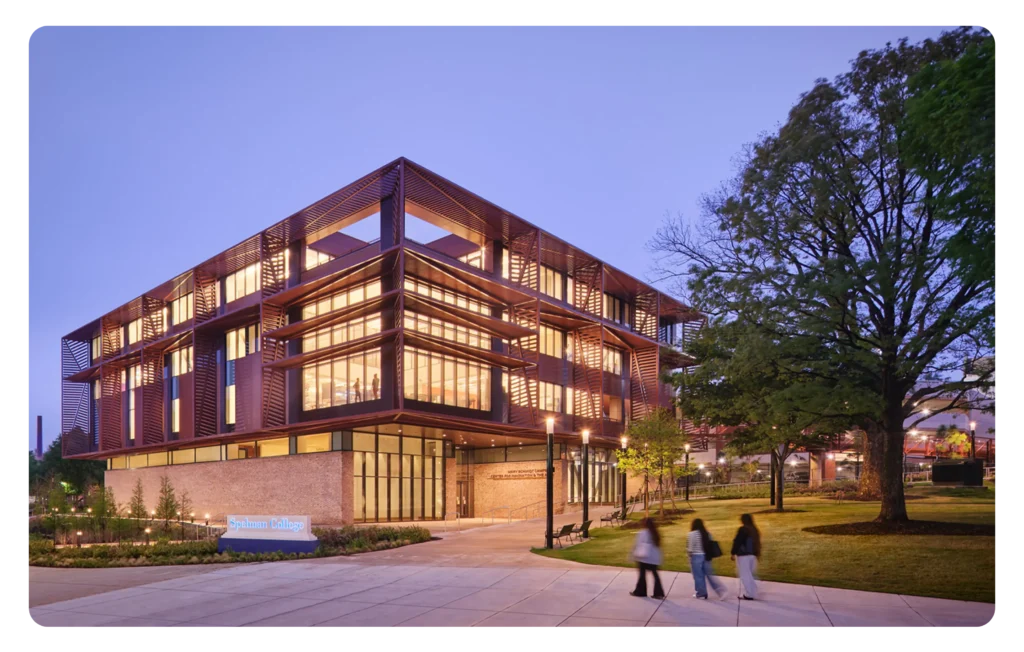
Spelman College is advancing its commitment to student success and belonging. CampusGroups supports a more connected, data-driven approach to student engagement, bringing visibility to co-curricular involvement across campus life. The platform is helping Spelman better understand how students engage, and how to strengthen retention, wellbeing, and long-term outcomes.
Type of Institution:
HBCU
Client Since:
2025
Location:
Atlanta, Georgia
Student Population:
2,100

About Spelman College

Founded in 1881, Spelman College is a historically Black liberal arts college for women in Atlanta, Georgia. Consistently ranked among the top HBCUs and liberal arts colleges in the country, the college combines a rich tradition with a forward-looking commitment to preparing students for impact in a global society.

Outcomes

Spelman College is in the early stages of implementing CampusGroups. These priorities and early indicators are shaping the college’s investment in the platform:
Building a stronger student success narrative
through dashboards that clearly communicate impact to boards and donors.
Advancing data-driven fundraising
as Student Affairs has raised $3.75 million by better demonstrating the value of co-curricular programming.
Modernizing student communications
with a mobile-first approach designed for a student body that lives on their phones.

Challenges

As Spelman deepens its focus on student success and retention, the division of Student Affairs identified several critical challenges:

  • Capturing the full student experience: While Spelman has strong wraparound support for first-year students and seniors, students in their junior year—navigating major decisions, internship searches, and identity development—were harder to track and support proactively.
  • Quantifying the value of student affairs: Like many institutions, Spelman faced the challenge of translating the impact of co-curricular programming into a language that resonates with boards, donors, and senior leadership—quickly and compellingly.
  • Supporting special populations: With approximately 54–57% of students Pell-eligible and around 12% first-generation, Spelman needed a more targeted way to identify and support students from less privileged backgrounds without stigmatizing them.
  • Balancing involvement with wellbeing: Spelman students are highly engaged, often carrying double majors, triple minors, and multiple leadership roles simultaneously. The college needed better insight into when involvement becomes overwhelming rather than empowering.

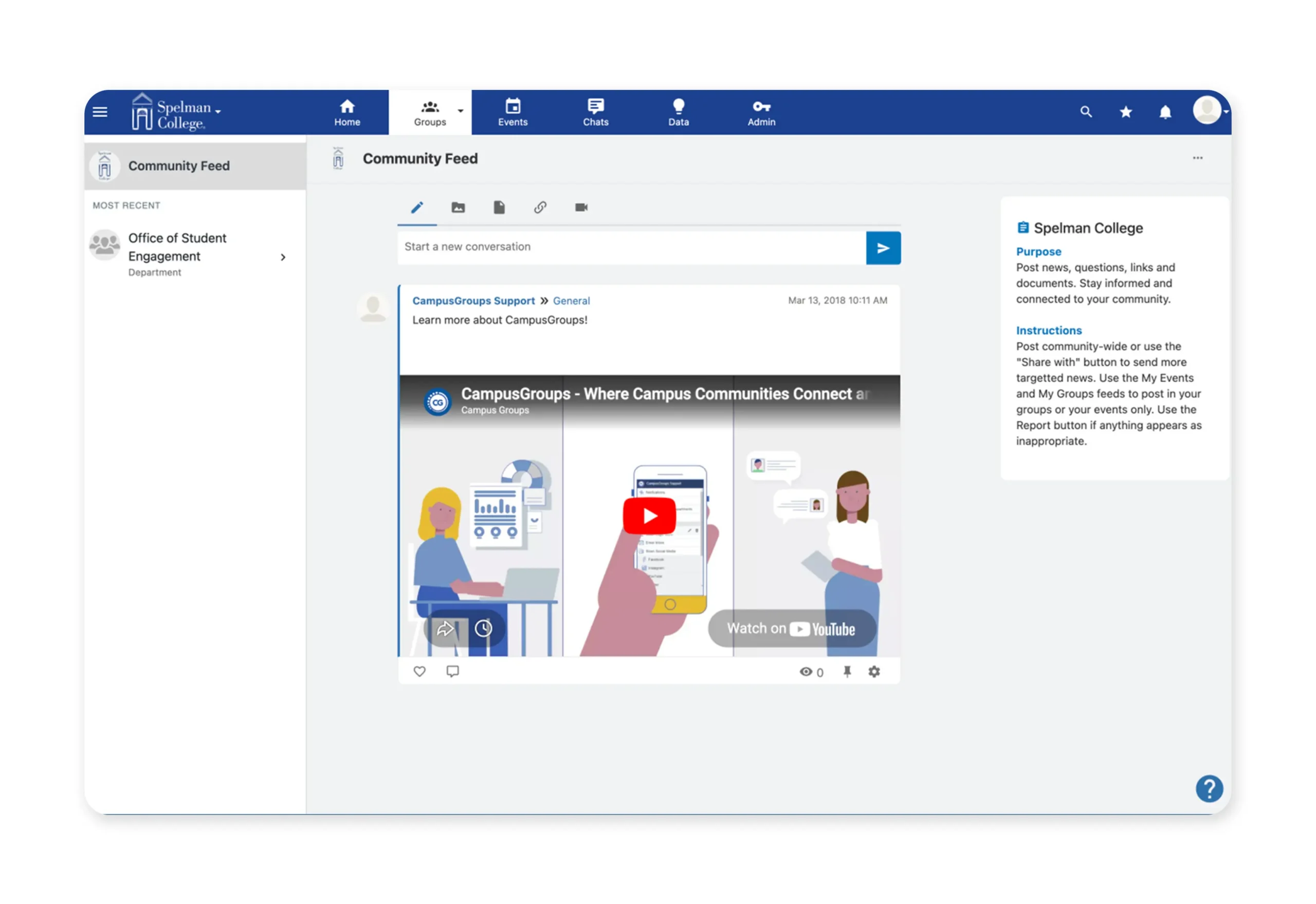
Modernizing communication: Students had long indicated they do not read emails. Spelman needed a mobile-first communication channel that meets students where they are.
Solutions

Spelman College is implementing CampusGroups as a central pillar of its student success strategy, with a focus on data, belonging, and co-curricular development.

  • A data-driven student success narrative: Spelman’s Student Affairs division recently hired a dedicated data analyst to build its “student success data narrative.” CampusGroups will power this effort with engagement dashboards that help leadership quickly see where students are thriving and where support is needed. This approach has already helped raise $3.75 million for student affairs initiatives.
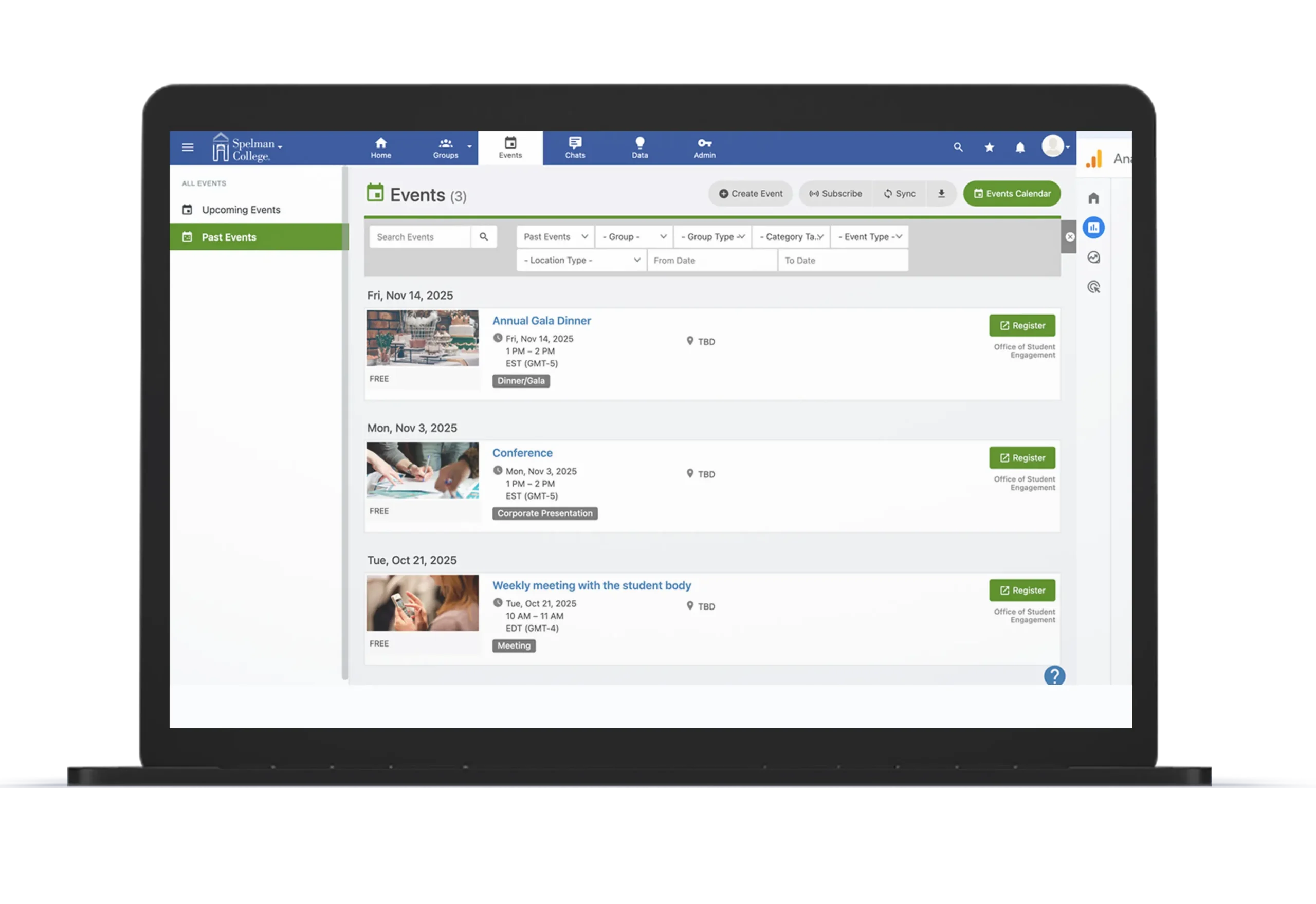
  • Co-curricular transcripts for career readiness: Spelman is developing a co-curricular transcript that captures learning beyond the classroom, including clubs, events, leadership roles, and service. It will help graduates showcase the skills and experiences employers increasingly value.
  • Targeted support for special populations: Using a strengths-based model, Spelman identifies student groups that may benefit from additional support. Initial groups include first-generation, transfer, third-year, and non-traditional students. CampusGroups will help staff monitor engagement and respond early to signs of disconnection.
  • Mobile-first student engagement: The CampusGroups mobile app will give students real-time access to events, resources, and campus information. It aligns with student preferences for mobile communication over email.

Emergency grant dashboards: As an early proof point, Spelman created a dashboard focused on emergency grants. It provides a clear view of fund distribution and student support, with plans to expand this model across Student Affairs.

“We have to be thinking also about modernization.”
“We can't just be anchored in the mission. We have to be thinking also about modernization. At Spelman, we are having deep discussions about being future ready.”
Dr. Darryl Holloman, Vice President of Student Affairs
Spelman College
“Employers are looking to understand what students are learning outside the classroom.”
“The co-curricular transcript is just as important today as the academic transcript, because employers are looking to understand what students are learning outside the classroom.”
Dr. Darryl Holloman, Vice President of Student Affairs
Spelman College
“We’re looking forward to building out Ready Education even more.”
“If you only have five minutes to get the dollars, data is everything. And we're looking forward to building out Ready Education even more so we can really see how our students are managing their lives.”
Dr. Darryl Holloman, Vice President of Student Affairs
Spelman College
“It’s time for us to listen and communicate.”
“Students have been telling us for 20 years they don't read their emails. It's time for us to listen and communicate in ways that are receptive to them.”
Dr. Darryl Holloman, Vice President of Student Affairs
Spelman College

Conclusion

Spelman College’s partnership with Ready Education reflects a commitment to modernizing student success while staying true to its mission.

By building a data infrastructure that captures how students engage, connect, and grow—and by intentionally supporting key student populations—Spelman is shaping a model for future-ready student affairs at HBCUs.

As the platform matures and data deepens, Spelman will be better positioned to demonstrate the impact of co-curricular programs, strengthen retention, and prepare graduates for a world that values both knowledge and experience.