
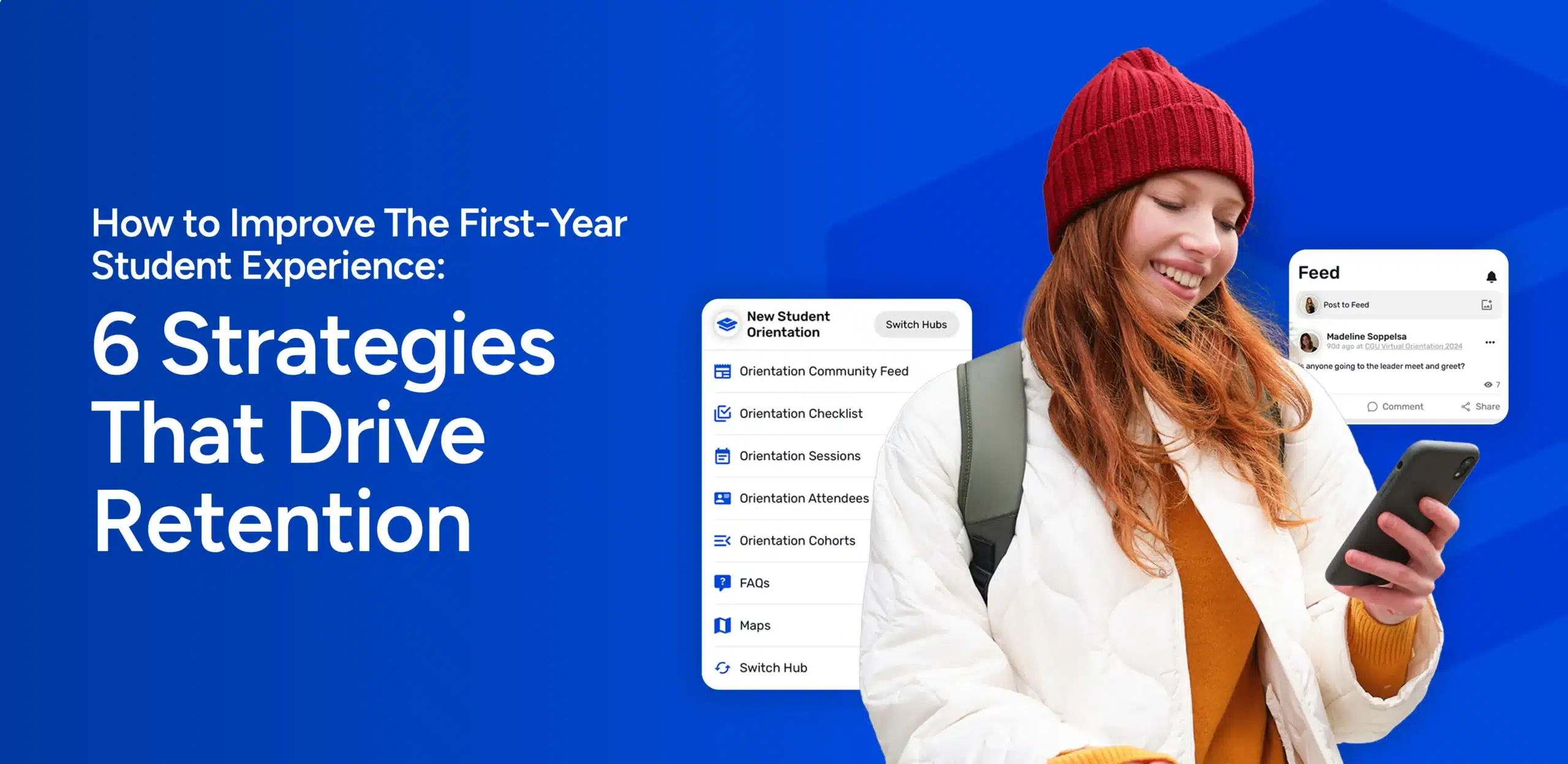
The first year of college is critical. Research from the Education Data Initiative shows that around 22.3% of college dropouts happen during freshman year. Students who feel welcomed, connected, and supported are far more likely to complete their degree. For colleges and universities, the first-year experience is not only a student welfare issue. It is also a retention strategy.
Today’s students are digital natives. They manage their lives on their phones. They expect seamless, personalized, mobile-first experiences from every service they use. Their college should be no exception.
What many institutions overlook is that the student experience begins before the first class. Retention risk often starts during enrollment and orientation.
Confusing processes, poor communication, and disconnected systems create frustration early. Students can feel overwhelmed before they even arrive on campus. Colleges that create smooth onboarding experiences build trust early. They also improve student confidence, engagement, and retention.
Why the First-Year Student Experience Matters
The first-year experience shapes everything that follows. Students who feel a sense of belonging are more motivated. They also report better mental health and stronger academic confidence. Most importantly, they are more likely to return for their second year.
Research from the National Survey of Student Engagement supports this. First-year students who plan to stay score higher on measures of belonging. Belonging is built through connection, communication, and access to support. That process begins during enrollment and orientation. Students are deciding whether they feel supported and capable of succeeding.
A student’s first impression is rarely the classroom. It is the application portal, enrollment process, and orientation experience. When those experiences feel smooth and connected, students gain confidence early.
Technology plays a major role in making that possible at scale. Here are six strategies that help institutions improve the first-year experience while reducing attrition risk.
1. Increase Accessibility for Prospective Students
The first-year experience starts before students arrive on campus. For many students, especially first-generation students, accessibility influences enrollment decisions. Traditional campus tours still matter. However, they are not accessible to every student. Travel costs, distance, and scheduling challenges prevent many students from visiting in person.
Virtual campus experiences help close this gap. A strong digital experience helps students explore campus life before enrolling. It can showcase support services, student clubs, housing, and academic resources.
The best virtual experiences go beyond static content. Student-led video tours, live chat, interactive events, and social feeds help prospective students feel connected early.
These early touchpoints also reduce “summer melt.” This happens when admitted students never complete enrollment or arrive on campus. Consistent communication and accessible onboarding keep students engaged during the transition period.
Key takeaway: Strong digital experiences improve access, reduce enrollment friction, and build belonging before students arrive.
2. Create a Smooth Enrollment Process
Enrollment is one of the highest-risk moments in the student journey. When enrollment feels confusing or frustrating, students disengage quickly. Many institutions still rely on disconnected systems and unclear workflows. Students often repeat tasks or struggle to find information. These issues create stress during an already challenging transition.
A smooth enrollment process directly impacts retention and student confidence. Today’s students expect enrollment to feel like every other digital experience they use. They expect it to be fast, intuitive, and mobile-friendly.
Digital enrollment tools reduce friction for both students and staff. Automated workflows, online payments, digital document uploads, and mobile task management simplify the process.
Communication also matters. Students need answers quickly, not only during office hours. Automated reminders, push notifications, and in-app messaging help students stay informed and on track. This support is especially important for first-generation students, commuter students, adult learners, and international students.
Centralized communication creates clarity during a stressful period. Students feel more prepared and more confident in their enrollment decision. The result is stronger enrollment yield, lower melt, and better first-year retention.
Key takeaway: A smooth enrollment process builds trust early and improves student retention before classes begin.
3. Personalize the Student Journey Starting with Orientation
Orientation is one of the most important moments in the first-year experience. Done well, orientation reduces anxiety and builds confidence. Done poorly, it overwhelms students with too much disconnected information.
The best institutions treat orientation as an ongoing onboarding journey. It should begin immediately after enrollment and continue through the first semester. Modern engagement platforms make personalization possible at scale. Students receive information based on their individual needs and experiences.
International students need different resources than commuter students. Adult learners need different support than recent high school graduates. High-impact digital orientation experiences often include:
- Interactive onboarding checklists.
- Push notifications and automated reminders.
- Peer mentor introductions before arrival.
- Digital maps, schedules, and housing information.
- Mobile-friendly video content.
- Early access to student communities and clubs.
Introducing students to the campus platform before arrival creates familiarity early. Students arrive already connected to campus resources and communication channels. This continuity matters. Students who feel informed and connected before classes begin are more likely to stay engaged during the transition to college life.
Key takeaway: Personalized orientation reduces stress, builds belonging, and supports early retention.
4. Digitize Access to Information and Resources
Many first-year students struggle to find information. Students often ask the same questions repeatedly. Where do I find tutoring? How do I access counseling? Where is financial aid information? When resources are scattered across different platforms, students stop looking.
A centralized student engagement platform solves this problem. Students log in once and access everything they need in one place. Schedules, deadlines, support services, events, clubs, and administrative tools become easier to navigate. This continuity is especially important during enrollment and orientation.
Students should not feel like they are learning a new system every few weeks. A connected digital experience reduces confusion and cognitive overload. This approach especially benefits first-generation students, adult learners, online students, and Pell-eligible students. These students often need more support while facing greater barriers to access.
Mobile-first platforms help remove those barriers. System integrations strengthen the experience further. Single sign-on, student information systems, learning management systems, and payment tools all contribute to a smoother student journey.
Key takeaway: One platform and one login create a simpler and more connected first-year experience.
5. Create a Digital Community Where Students Can Connect
Research consistently links belonging to student success. Students who feel connected perform better academically. They also report stronger mental health and higher motivation. Most importantly, connected students are more likely to persist.
Building a community can be difficult for first-year students. Many are living away from home for the first time. Others commute or study online. Some feel anonymous in large campus environments. The earlier institutions create connection opportunities, the stronger the retention impact.
Community building should begin during orientation, not after classes start. Digital community tools lower barriers to connection. Student organizations, peer mentoring, event calendars, discussion feeds, and chat tools help students find their place.
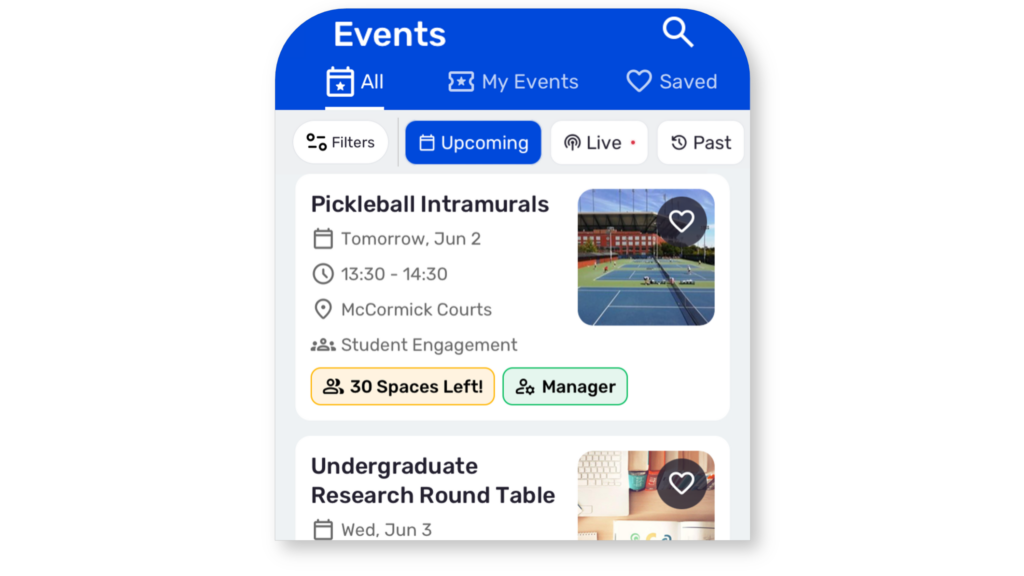
Mobile event registration is especially valuable. Students can discover and attend events directly from their phones. For online and remote students, digital community tools are essential. Without them, students can feel isolated from campus life. With them, students can participate fully in campus communities and conversations.
At Rocky Mountain College of Art and Design, 70% of students study remotely. The institution uses digital community channels as a virtual town square. The college credits their student engagement platform with a 40% increase in graduating students from 2022 to 2023.
Key takeaway: Digital communities help students build connections early and strengthen long-term retention.
6. Track Student Engagement Data and Intervene Early
Early intervention is one of the strongest predictors of student retention. The challenge is that struggling students rarely ask for help immediately. Instead, they quietly disengage. They stop attending events. They stop logging in. They stop participating. In many cases, disengagement begins before classes start.
Students who ignore enrollment communications or skip orientation tasks may already be at risk. The most effective institutions identify these warning signs early. Modern engagement platforms provide valuable student engagement data.
Enrollment progress, orientation participation, event attendance, platform activity, and community involvement all create measurable engagement signals. These signals help staff identify students who may need support.
At the University of Wisconsin Stout, 41% of students who did not return showed zero involvement activity during the first five weeks. This was one of the strongest predictors of attrition.
At Louisiana State University, students who join at least one student organization have a 90% retention rate. Students who do not participate retain at a 74% rate.
Analytics dashboards, AI-powered insights, and automated workflows help institutions act quickly. Automated outreach, check-ins, and early alerts allow staff to intervene before students disengage completely.
Key takeaway: Engagement data begins at enrollment. Institutions that track early engagement can improve retention outcomes significantly.
How Ready Education Supports the First-Year Student Experience
Ready Education helps more than 700 institutions across 25+ countries create connected campus communities through the CampusGroups platform and mobile app. From pre-arrival onboarding to orientation and engagement tracking, CampusGroups supports students from the moment they enroll.
Institutions using CampusGroups have improved event participation, student connection, and retention outcomes. Whether students are residential, commuter, or fully online, CampusGroups creates a unified and mobile-first student experience.
Ready to improve the first-year experience at your institution? Learn more about CampusGroups.