
 Some members of this year’s freshman class won’t make it to graduation. Colleges have spent decades reckoning with this reality, and research continues to point to the same key factor in improving retention outcomes: student engagement in higher education.
Every institution wants similar things for its students: for them to enroll, stay the course of their program, graduate career-ready, build a successful career and life, and remain connected as alumni long after they’re done with college. An effective campus engagement strategy helps institutions make progress toward each one of these goals.
Increasing engagement requires institutions to meet today’s students where they are. Students who have grown up with mobile phones that connect people and places across their lives expect something similar from their college experience. They expect to have one place to find community, browse events, and get answers to their questions without needing five different logins. Institutions that facilitate that through a student engagement platform often end up with stronger, more connected campus communities.
In this guide, we’ll cover some frequently asked questions about student engagement in higher education, as well as 5 high-impact strategies to help improve your campus engagement strategy, drawn from our experience of helping 700+ institutions engage their campus communities.
Student Engagement in Higher Education: FAQs
What is included in student engagement?
Student engagement covers much more than many expect. It includes involvement, such as joining a club or attending an event, but it also covers smaller things: opening a campus app, responding to a survey, using the career center’s resources, or showing up to an advising appointment. Simply put, student engagement refers to the experiences that students have with their institution outside of the classroom that help them remain connected to campus life.
How is student engagement different from student satisfaction?
Student engagement looks at a student’s involvement outside the classroom (joining clubs, using campus resources, going to events, etc.), while student satisfaction merely accounts for how a student feels about their college experience. A student can report high satisfaction with their institution without being involved in campus life. Engagement is usually a stronger predictor of whether or not a student stays enrolled because it accounts for what they do, not just what they say.
What is student success?
Student success in higher education is broadly defined and measured by three key indicators:
- Retention
- Persistence
- Completion (i.e., graduation)
Institutions work hard to support students in achieving these measures of success. Colleges and universities that have achieved higher success rates invest in student engagement.
How can institutions improve student engagement?
There is no set formula for how to improve engagement, but a few best practices for student engagement can make a significant difference. These include: investing in the right technology, centralizing campus communications, improving the first-year experience, emphasizing career readiness, and making room for personal growth and development.
5 High-Impact Ways to Increase Student Engagement:
1. Invest in Technology
Technology plays a central role in enhancing student engagement.
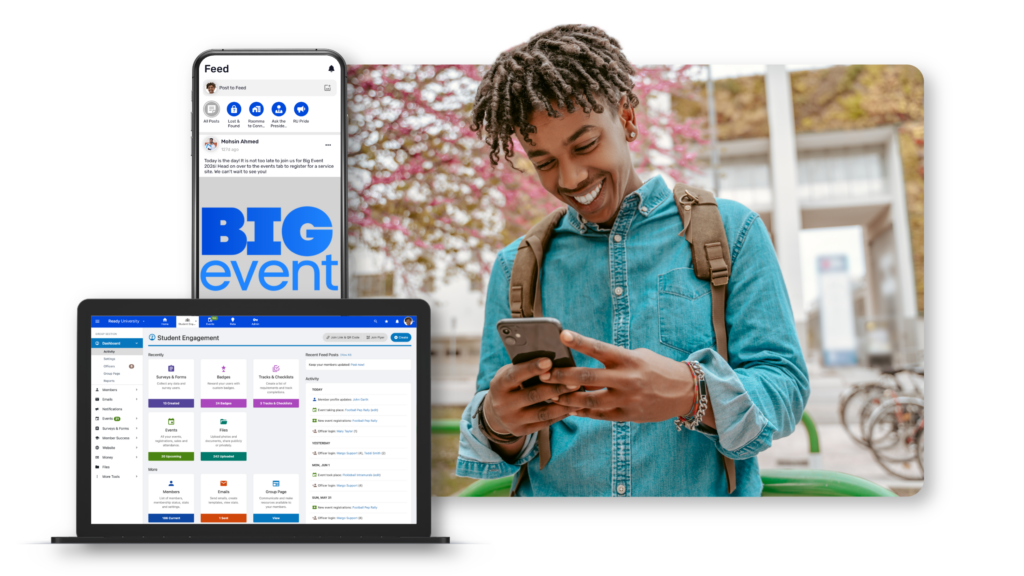
Student engagement platforms and mobile apps specifically encourage communication and collaboration among students and staff. They also help build meaningful connections and a sense of belonging, which research shows is fundamental to student retention and persistence.
Digital communities create a shared experience for all students. Historically, online students or students who live off campus have been less involved in the campus community than on-campus students. This has negatively affected their student experience and resilience.
Platforms that use gamification to incentivize and engage students are particularly successful. Leaderboards and badge or point systems are used to measure and reward engagement. Colleges sometimes enable students to use points to redeem prizes (campus swag, or money off tuition and books).
Some platforms enable administrators to track and measure student involvement and academic performance. Having a holistic view of each student in one place means that staff spend less time collecting data across multiple systems and more time supporting students.
Monitoring student engagement and well-being in real time empowers campuses to quickly identify disengagement. Once at-risk students are identified, faculty and staff can work together to proactively provide support.
2. Centralize Communication
Institutions with a campus-wide, centralized communication solution have seen great improvements in student engagement.
Student engagement platforms that are well-designed and comprehensive become the go-to resource for students. They ensure students can access the information and resources they need when they need.
The most successful solutions serve as a one-stop shop for academic, co-curricular, and student service information. They do this through the breadth of features offered and robust integrations with other applications, including SSO, SIS, room reservation software, and payment gateways.
Student involvement platforms that offer multiple communication channels to help students connect with each other have higher adoption rates. Solutions that enable students to customize their platform by setting preferences, interests, and other personalizable content are also proven to increase usage.
Sometimes the breadth of available features can seem intimidating. Therefore, campuses should regularly direct students to key resources, such as:
Discussion feeds
Let users know what’s happening on campus, post news, photos, and interact with others.
Events management
Students can browse upcoming events, see who’s attending, view dress code & other details, RSVP, retrieve tickets, and receive confirmation.
Push notifications
Users can send mobile reminders to all or a subset of students, promoting the latest news or updates (e.g., event location moved).
Campus maps
Colleges can upload custom maps of campus buildings, floors, and rooms. This helps students locate and orient themselves on the go.
Campus-wide directory
Students and administrators can easily browse the campus directory to expand their network or communicate directly with personal contacts.
Chat
Allows students to connect and message classmates anywhere, anytime, one-on-one or in groups.
Campus mobile app
Offers students a fully centralized mobile experience for accessing campus resources (e.g., academic systems, student services) and communication channels.
3. Create a Strong First Year Experience
Research shows that the highest dropout rate, around 24%, occurs in the freshman year. This is why engaging first-year students is critical to increasing graduation rates.
Colleges with the highest graduation rates invest in creating robust orientation and first-year programs. These programs provide students with the resources they need to successfully start their higher education journey from day one.
Orientation programs help freshmen get excited about campus life, contributing to student engagement and resilience. Incoming students explore the campus, its traditions, and culture. They also learn about the different resources and services available to students.
Networking opportunities for students to meet faculty and peers are organized. These events help build a sense of community before the fall semester starts. Programs are generally held in person. However, many schools offer virtual programs for students unable to travel or who plan to enroll in online classes.
Orientation programs that offer virtual components make the onboarding process more engaging. Dedicated orientation apps are especially effective. Some include a targeted onboarding checklist of requirements students need to complete. They also enable administrators to track progress and attendance, and reach out to less engaged students.
First-year programs help students build social connections. They do this by organizing social events and promoting co-curricular activities throughout the year.
Engaging first-generation students
Many colleges offer specific programs for first-generation students. This growing segment of the student body has higher dropout rates as they often lack the support networks needed to successfully navigate the college experience.
Raising awareness around key resources, including financial aid sources and campus services, can go a long way in bridging this gap. Summer bridge programs are also very effective in providing first-generation students with the knowledge and skills needed to succeed.
4. Develop Career Readiness
Developing career readiness is a key way to engage students. It enables students to map out their career path, increasing their chances of finding purposeful work upon graduation.
Career readiness is a framework for higher education establishments to help students develop core competencies, including leadership, critical thinking, professionalism, and teamwork. These core skills are developed inside and outside of the classroom.
High-impact practices such as career readiness programs help students develop clear pathways based on career goals. Interactive tracks & checklists, guiding students through to-do lists and intentional pathways, help students set and achieve goals.
The ability for students to track their achievements provides a more engaging learning experience, encouraging autonomy and self-efficacy. It also allows administrators
to incentivize and reward student successes.
Career center services can also provide added support to students who have been identified as falling behind. Career advisors, networking events, and resume writing workshops are great ways to get students engaged in career planning and development.
Career fairs also provide students with the chance to learn about companies, making face-to-face connections with potential employers and recruiters. Some platforms include an interactive map, a directory of companies, the ability to book meetings, upload a resume, and chat with recruiters, which creates a more engaging experience.
5. Stimulate Personal Growth and Development
Personal growth and development activities also contribute to increasing student engagement.
Students who engage with student organizations, clubs, Greek life, or sports teams have a more positive college experience. This is because student interest groups help members build a sense of belonging.
Student clubs and organizations play a critical role in community building, diversity, and inclusion initiatives. They enable students to find a purpose and feel connected. This is especially true in large school environments where it can be challenging for students to find their path. They also help prevent student burnout by balancing out the stresses of academic life.
A great way to help students discover and join groups, even remotely, is to host a student involvement fair. Student groups and campus departments set up customizable booths for students to visit, ask questions, and learn more about their organization.
Student engagement platforms also encourage students to join student clubs and organizations, view programming, register for events, and connect with members. Innovative solutions match students to organizations or other students based on their user profile and listed interests.
Document growth outside the classroom with co-curricular transcripts
Some also offer the capability to track student engagement through co-curricular transcripts (CCT). The CCT is a comprehensive and certifiable record of a student’s involvement in learning experiences that take place outside the classroom. They are used to demonstrate a student’s core competencies to graduate programs or potential employers.
Mentorship programs also contribute to students’ personal growth. Mentors help by sharing personal experiences, resources, and making connections. Most alumni associations offer mentoring programs, facilitating relationships between students and fellow alumni.

Enhance your campus engagement strategy today
Student engagement helps students stay the course, even when the going gets tough.
A strong campus community provides students with the support they need to achieve academic, professional, and personal goals throughout the student journey and beyond.
Since no two students’ journeys are the same, it is important to engage in an ongoing, personalized dialogue to support a successful student lifecycle for all.
Looking to increase student engagement at your institution?
Trusted by more than 700 institutions in over 25 countries, CampusGroups by ReadyEducation helps universities centralize resources, streamline student communication, and drive retention. Get in touch to learn more! Contact us.