

Students who feel connected to their campus community stay enrolled. According to research from Complete College America, students who are highly engaged are 38% more likely to graduate within six years than those who are not. To get involved and stay the course, students need clear ways to connect with peers and student groups, access campus resources, and keep track of their progress. The problem is that many institutions rely on a patchwork of disconnected systems, making it harder for students to navigate college and stay motivated.
A centralized student engagement platform can help your institution better serve students by centralizing communications, events, services, and resource management into a single system. Regardless of whether they live on campus, commute, or study online, students can stay connected. The right solution also helps staff proactively identify disengaged students and offer support before it becomes a retention problem.
In this guide, we’ll break down what to look for in a student engagement platform and cover nine platforms worth considering, including what each one does well and where it falls short.
Looking for an engagement platform that covers the entire student journey? Try CampusGroups
What to Look for in a Student Engagement Platform
Choosing the right engagement platform for your institution begins with a well-informed search, and the criteria below are a great place to start. Each feature maps to a challenge many campuses face, such as helping disconnected first-year students find their footing, creating online communities for remote learners, or ensuring that students struggling with basic needs can find resources and support.
A unified student engagement platform should include the following elements:
- A branded, native mobile app: A way for students to access all things campus life from anywhere.
- Club and event management: one place to discover, register for, and check into events, plus tools to manage rosters, approvals, and budgets for student organizations.
- Social networking features: Peer-to-peer chat, discussion feeds, and online groups so residential and off-campus students alike can find those who share their interests.
- Centralized communications: Targeted emails and push notifications that reach the right students at the right time.
- A student services hub: A centralized dashboard for students to access academic, financial, and career support.
- Co-curricular tracking and gamification: Guided pathways, badges, and a co-curricular transcript that shows students what they’ve done and what comes next.
- Data intelligence and analytics: Dashboards and reports that show your administrators who’s engaged, who’s beginning to disconnect, and what kind of campus programming improves retention outcomes.
- Integrations: Connections with your institution’s other tools, such as your student information system (SIS), learning management system (LMS), and single sign-on (SSO).
- Full student lifecycle coverage: Support that starts before orientation and continues beyond graduation through alumni engagement.
Top Student Engagement Platform Providers 1. CampusGroups by Ready Education: Best Overall Student Engagement Platform
 1. CampusGroups by Ready Education: Best Overall Student Engagement Platform
CampusGroups by Ready Education is the premier unified student engagement platform, built to cover the full student experience, from pre-orientation and welcome week through student life and graduation. CampusGroups even extends into alumni life, retaining engagement data from a student’s time at your institution and providing tools for alumni clubs, career events, mentoring, and an alumni directory, so relationships built on campus continue long after college ends.
CampusGroups centralizes clubs, events, communication, community, services, and social networking into one branded mobile and web app. This way, students can easily find their people, and staff have a single system to track engagement and manage campus life. More than 700 institutions in over 25 countries use the platform, including 75 percent of the top 20 universities worldwide and 11 out of 13 “Ivy Plus” institutions.
The app is fully branded and native, so it carries your school’s name and look on every student’s phone. Students join groups, register for events, chat with peers, reach support services, and build a co-curricular transcript they can send to employers and graduate schools. Plus, guided pathways and gamified tracks give first-years, first-generation students, commuters, and online students their own paths with clear next steps, rather than a one-size-fits-all plan.
Beyond the student experience, CampusGroups Data Intelligence gives staff real-time dashboards, AI insights, customizable reports, and a data export API. Administrators can see which student populations are pulling away before it becomes a retention problem. The platform connects to SIS, LMS, and SSO systems, and its modular design lets teams add capabilities as needs grow. By moving to CampusGroups, many institutions simplify their tech stacks and move away from costly, disconnected point solutions.
Pros:
- End-to-end student lifecycle management encompasses pre-orientation, the first-year experience, student life, graduation, and alumni engagement.
- Branded native mobile app for on-the-go access.
- Peer chat, community feeds, and online groups that help students find their place.
- Centralized student organization and event management to empower both student leaders and administrators through simplified approvals, budgeting, and reservations.
- Data Intelligence dashboards, AI insights, and reports that flag students at risk of disengaging.
- Replaces separate tools for communications, events, student services, and resource management.
- Integrates with other campus systems.
Cons:
- An all-encompassing student engagement solution requires a more thoughtful and involved rollout and adoption plan than a system with fewer capabilities.
- Institutions need to coordinate across departments, such as student affairs, IT, and communications, to get the most value out of CampusGroups.
Ready to see CampusGroups in action? Get a Demo
2. Engage: Best for Multi-Level Student Group Oversight
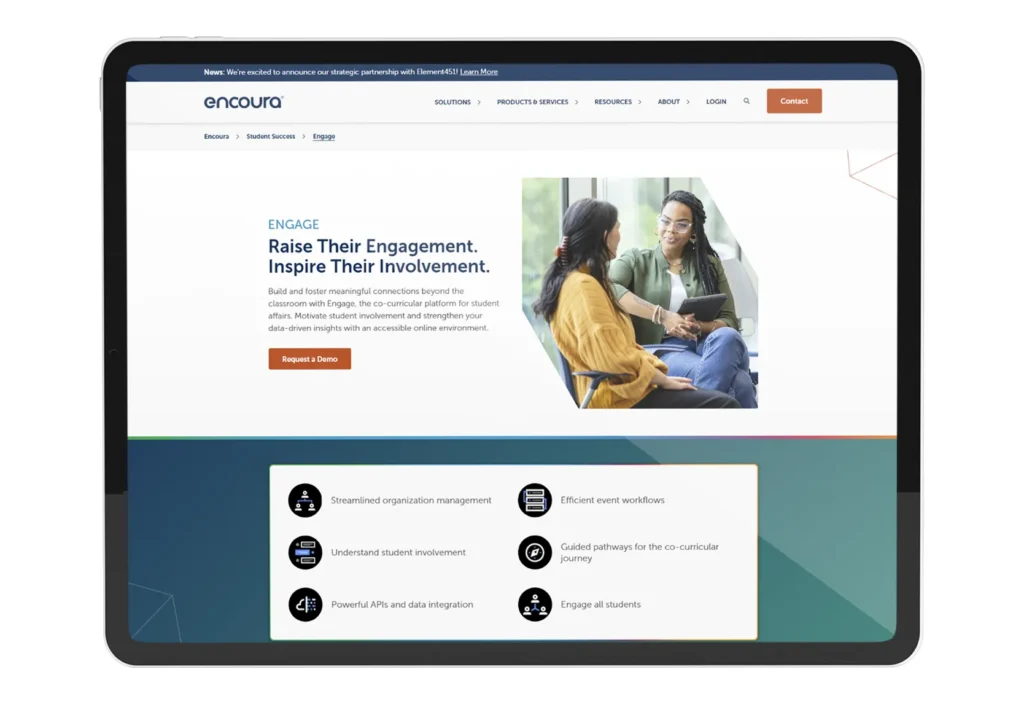
Encoura’s Engage (formerly Anthology Engage) is a co-curricular platform for student affairs teams. Engage specializes in overseeing student organizations across a large, decentralized division, enabling institutions to mirror their structure through administrative branches, while event tools handle digital reviewer workflows, room and resource integration, and RSVP features. The platform also supports workforce readiness through automated, verified co-curricular records that come with guided pathways and badges.
Pros:
- Registration, renewal, and approval workflows that align with your institution’s structure.
- Event planning tools with reviewer workflows, room and resource integration, and RSVP features.
- Automated co-curricular records, guided pathways, and digital badges.
Cons:
- Engage no longer connects to other Anthology platforms, a feature that was previously one of its strengths. Many institutions are moving from Engage to CampusGroups to return to a unified student engagement platform.
- It is primarily a web-based platform without a built-in mobile app, so students may struggle to use it daily.
- Engage focuses on organization management, meaning institutions usually need additional tools for communications, student services, and analytics.
3. Webex by Cisco for Education: Best for Video Conferencing
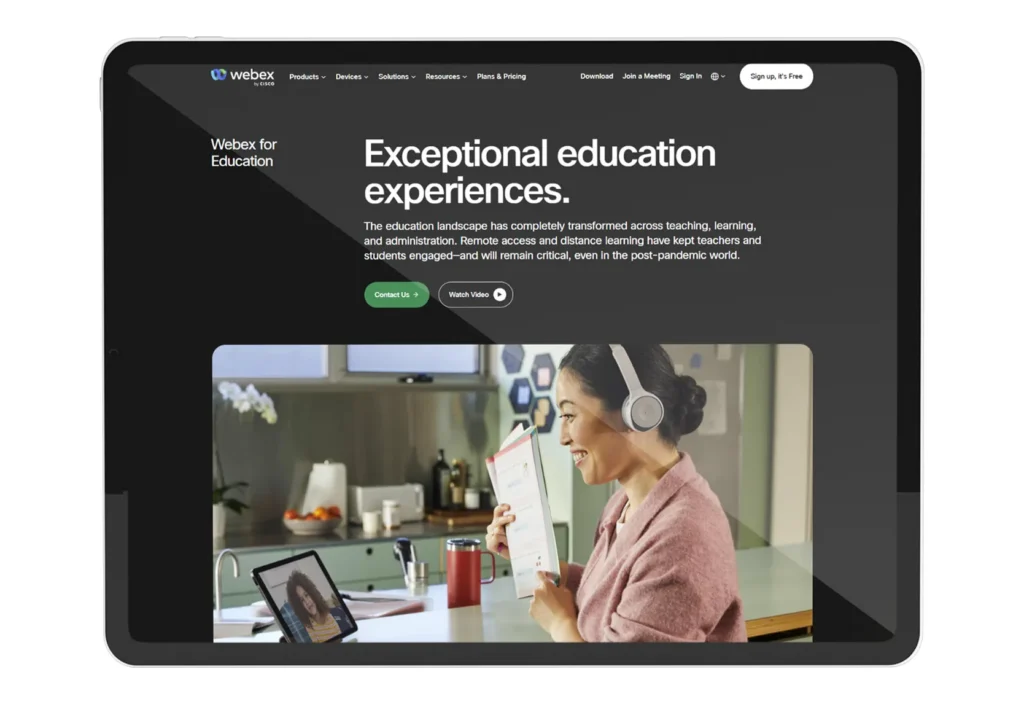
Webex by Cisco is a video and collaboration tool rather than a campus life platform, but many institutions use it to keep remote and hybrid students engaged. Webex for Education includes video meetings, screen sharing, breakout rooms, digital whiteboards, polling, and messaging, with recordings saved as MP4 files. It also connects to learning management systems, including Moodle, Blackboard, and Canvas.
Pros:
- Engages online students through video meetings that feature breakout rooms, whiteboards, polling, and more.
- Works with common learning management systems, including Canvas, Moodle, and Blackboard.
- Strong encryption and FERPA– and COPPA-compliant security and privacy controls.
Cons:
- The platform is built for teaching and meetings, so it lacks tools for clubs, resource management, and co-curricular activities.
- Webex for Education does not feature engagement analytics or early alerts for students who are disengaging.
- The published starting price covers only 50 hosts, so larger campuses will need to request a quote.
4. StudentX Engagement by Unifyed: Best for AI Student Support
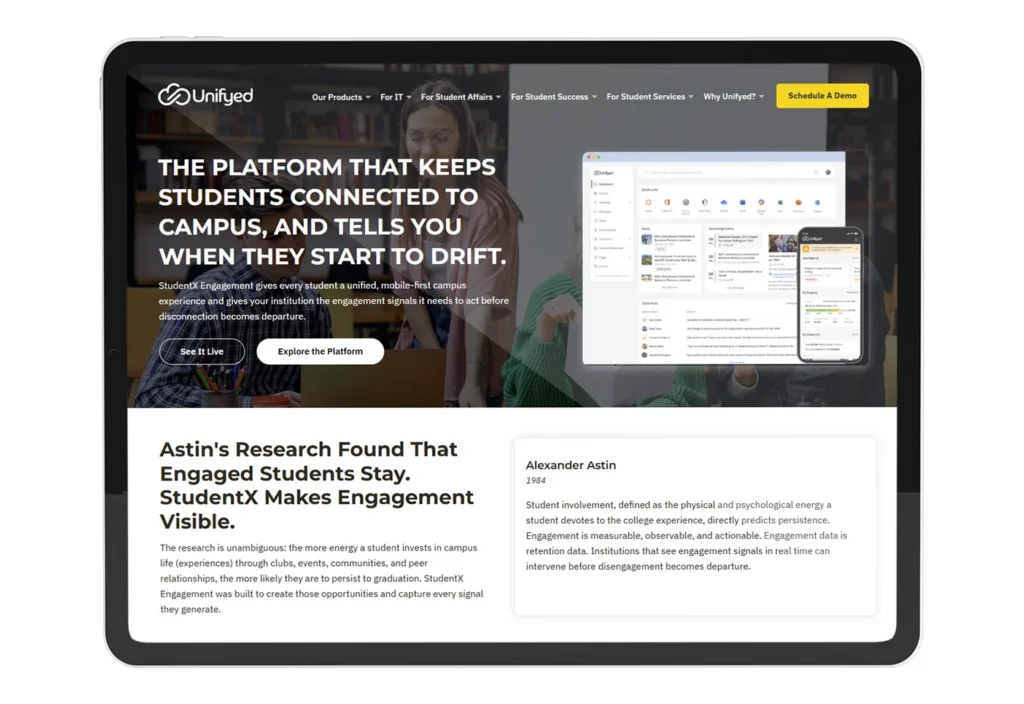
Unifyed’s StudentX Engagement is an AI-powered engagement platform with a branded native app for iOS and Android and a matching web portal that puts schedules, registrations, student organizations, advisor chats, and payments in one place. An AI assistant answers student questions by voice or chat, while real-time analytics help staff spot students who are disengaged or at risk. Unifyed also offers a student information system, an integration builder, and authentication tools separately for institutions that want to invest in additional systems while adding AI support.
Pros:
- Voice and chat assistant that gives students instant answers.
- Native iOS and Android apps, plus a web portal.
- Easy-to-use, no-code integration builder.
Cons:
- StudentX focuses on communication, support, and student records and places less emphasis on club management, event tools, and co-curricular tracking.
- StudentX is a recently unified release, so institutions still on Unifyed’s earlier Engage platform will need to plan a migration to reach it.
- Getting full value means adopting several StudentX products, which is a bigger project than adding a single app.
5. Pathify: Best for Parent and Family Access
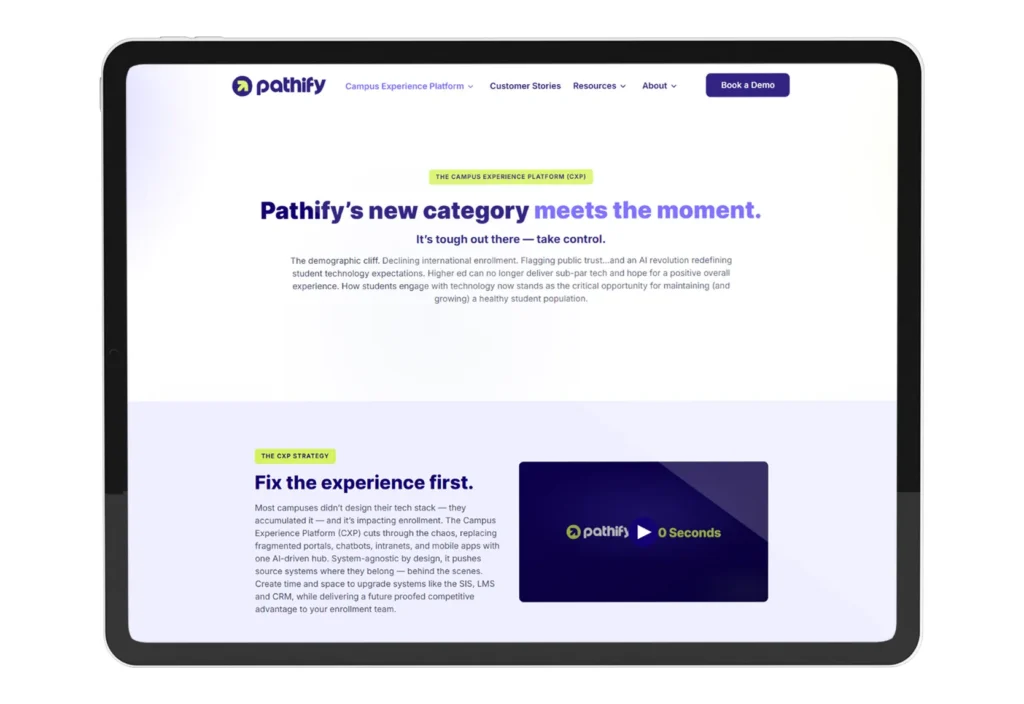
Pathify describes itself as a campus experience platform, offering a portal-style hub that sits in front of systems such as an institution’s SIS and CRM, with tailored web and mobile experiences for students, prospects, alumni, and staff. What sets it apart is its Parent Hub, which gives families a dashboard, groups, events, task checklists, and announcements via in-app notifications, text messages, and mobile push notifications.
Pros:
- Parent Hub with dashboards, groups, events, task checklists, and multi-channel announcements.
- More than 200 out-of-the-box integrations with the SIS, CRM, and other source systems.
- Separate experiences for prospects, students, alumni, staff, and families.
Cons:
- Pathify is primarily a portal that connects various systems, so capabilities like club and event management receive a smaller focus.
- Its value depends on connecting many source systems, so setup takes IT time and integration work.
- Some customers report a lag in getting live data to appear across different systems connected by Pathify.
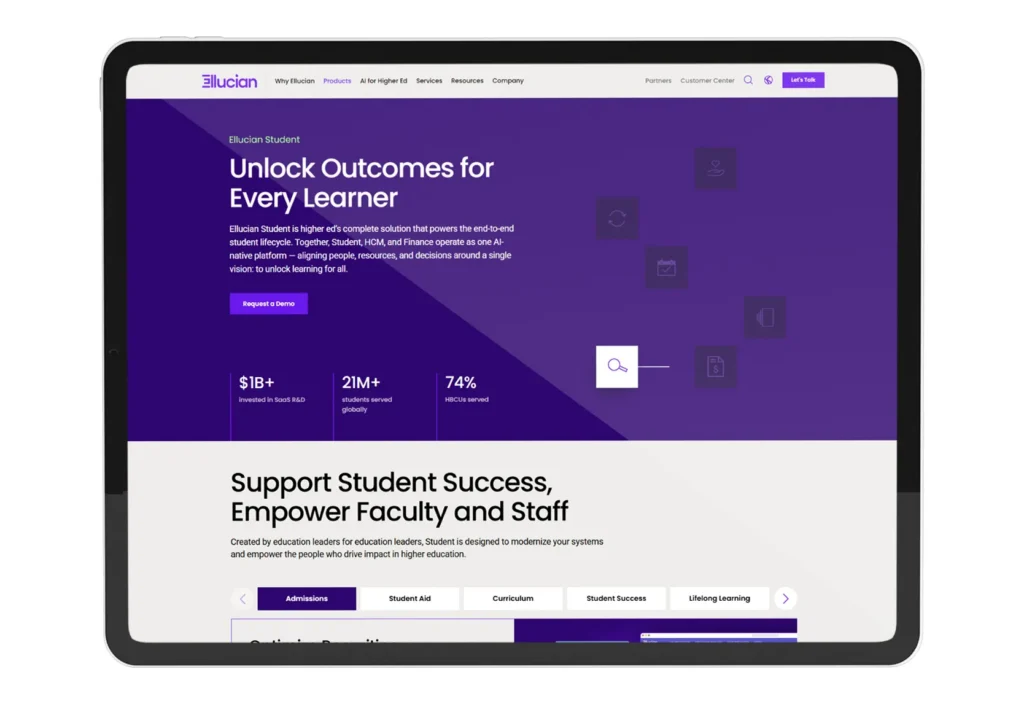
6. Ellucian: Best for Student Records and Campus Operations
Ellucian is best known for behind-the-scenes management for higher ed, including systems for student information, finance, and human resources. Ellucian Student covers recruiting, admissions, student aid, and advising. It runs on the Ellucian platform, which offers a central workspace, no-code process automation, and reporting and analytics, with AI features included in the subscription price. Institutions already using Ellucian may opt for a student engagement solution from the same vendor.
Pros:
- Student records, aid, advising, degree audits, finance, and HR under one vendor.
- Reporting and analytics, no-code workflow automation, and data integration tools.
- AI tools are included in an Ellucian subscription with no token purchases or usage caps.
Cons:
- Ellucian’s strength is in administrative systems, so clubs, events, and peer community features are less central to their offerings.
- Ellucian Student is a new platform with fewer client success stories to speak to its value.
- Moving from Ellucian’s legacy systems (Banner and Colleague) to Ellucian Student can require a great deal of manual work.
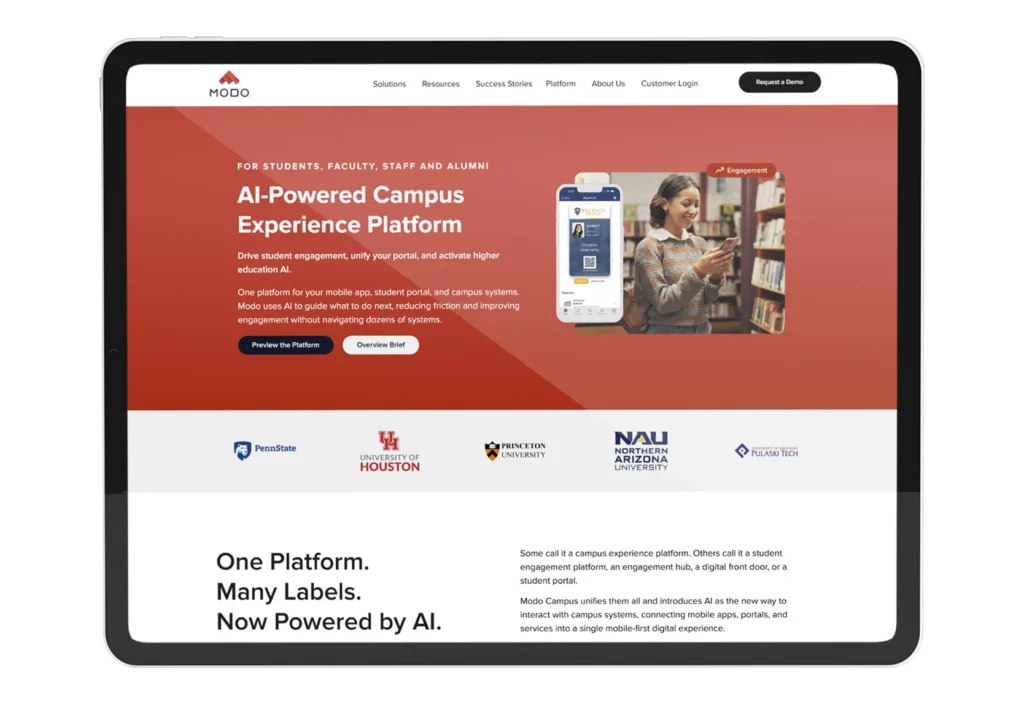
7. Modo Campus by Modo Labs: Best for Low-Code App Building
Modo Campus is a campus app and student portal built around its Modo Screen Builder, a low-code or no-code tool that lets campus staff design screens without a developer. This solution makes it simple for students to sign in once to access campus services, and the app can display different content for students, parents, alumni, faculty, and staff. It also connects to SIS, LMS, digital ID, and campus safety systems, with built-in maps, wayfinding, and an AI assistant, which suits IT-led teams that want to shape their own campus app.
Pros:
- Low-code and no-code Screen Builder that lets campus teams design and update screens.
- One login for campus services, with connections to SIS, LMS, digital ID, campus safety, and payments.
- Maps, AI assistance, and in-app content tailored to each type of user.
Cons:
- A build-it-yourself approach means someone on campus must own the app’s design and upkeep.
- Modo Campus and its My Community tool lack co-curricular transcripts that document involvement in campus life.
- Modo Campus does not natively include fund allocation workflows for student organization management.
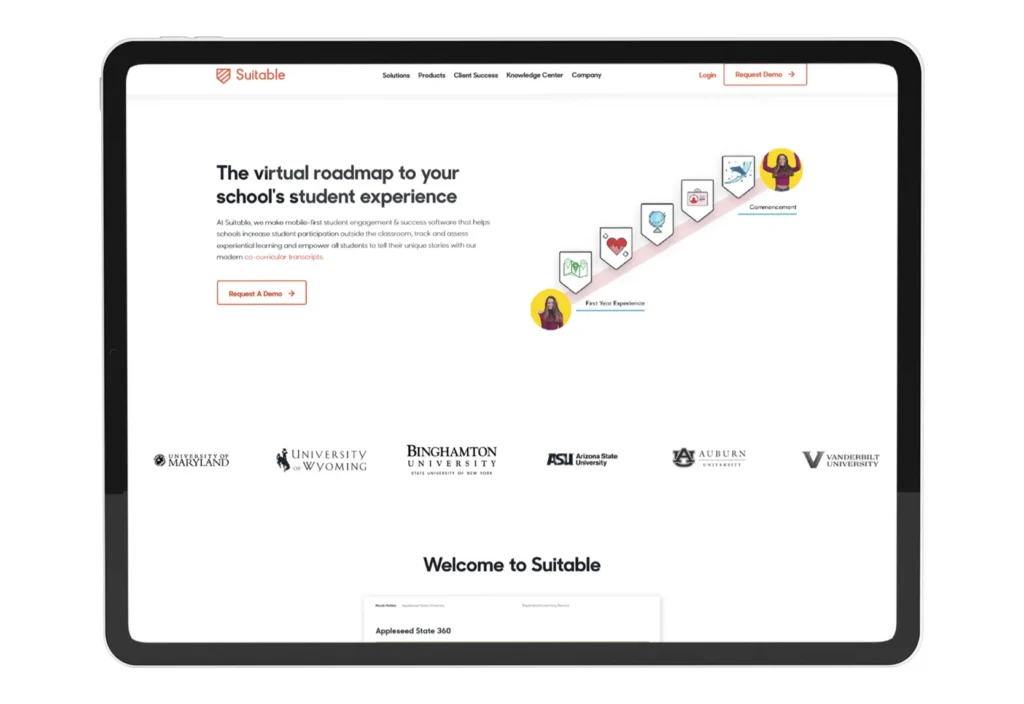
8. Suitable: Best for Service Hours Tracking
Suitable is a student engagement platform well known for its co-curricular features. Service hours tracking is one of Suitable’s biggest strengths, helping students log and get credit for extracurricular activities. Students record hours, administrators verify them through built-in workflows, and institutions can report on service for each student and across campus. It also offers a branded mobile app, organization management, guided pathways, and more.
Pros:
- Service hours tracking with verification workflows and individual and campus-wide reports.
- Record of service that students can keep and share.
- Points, badges, and leaderboards, along with a Co-Curricular Transcript that helps. students use campus involvement to demonstrate career readiness.
Cons:
- Suitable does not offer peer-to-peer chat or social networking features.
- While Suitable encompasses the student journey from enrollment to graduation, it cannot support alumni engagement efforts.
- It lacks a student services hub that provides easy access to academic, financial, and career resources.
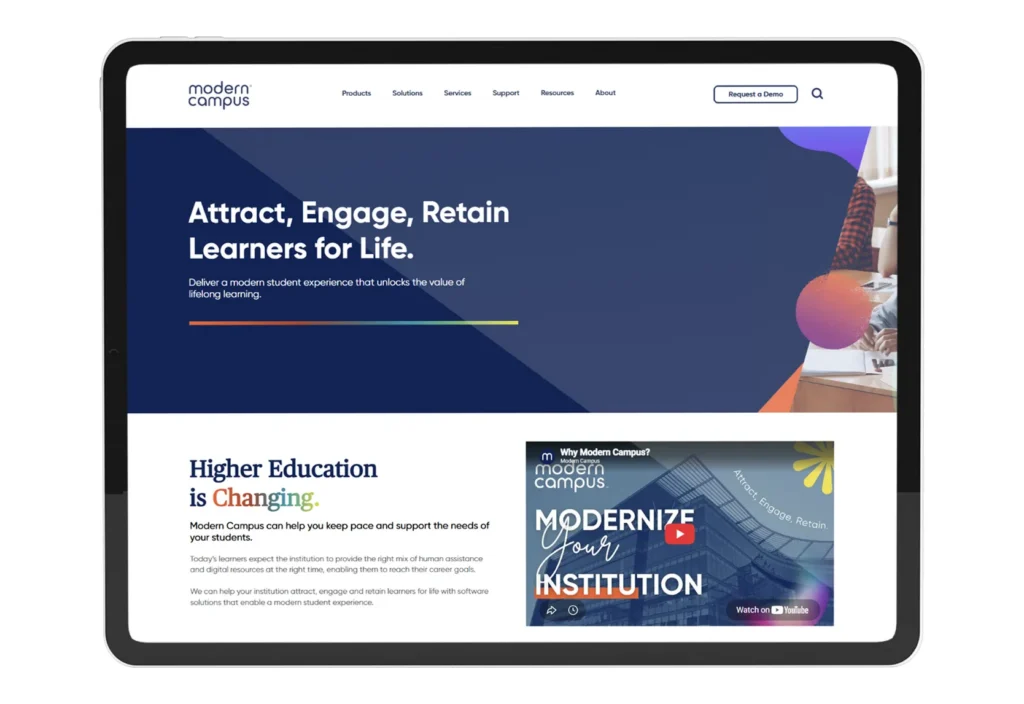
9. Modern Campus: Best for Continuing Education
Modern Campus is built mainly around continuing education and lifelong learning. Modern Campus offers products for web content management, course catalogs, curriculum management, and class scheduling, while its engagement tools include Involve for co-curricular management and Message for two-way text messaging. Modern Campus’s broad offerings allow institutions to choose the products they need to support lifelong learners.
Pros:
- Strong match for continuing education, workforce development, and non-traditional enrollment.
- Wide product range that includes web content management, catalogs, curriculum, and class scheduling.
- Two-way text messaging and a co-curricular tool, backed by an award-winning support team.
Cons:
- Modern Campus offers multiple separate products instead of a unified solution.
- It has no student-to-student chat or community feed, so students can hear from the institution but cannot message one another.
- Modern Campus’s student engagement offerings do not include a centralized student services hub or AI-powered engagement analytics.
Student Engagement Platform FAQs
Can one student engagement platform replace other campus software tools?
Yes, depending on the platform. This is one of the primary reasons that institutions opt for a unified student engagement software. A single platform can replace separate point solutions for event management, student services discovery, social networking, organization management, co-curricular transcript creation, and more.
How does a student engagement platform help with student retention?
A student engagement platform aids retention because students who are more involved in campus life are more likely to stay and graduate. With the right platform, you not only make it easier for students to find and sign up for opportunities to get involved, but also give administrators tools and analytics to proactively identify disengaged student cohorts and reach out before a lack of involvement begins to affect retention.
Will a student engagement platform work with the systems we already use?
Ideally, yes, but it depends on the vendor. Before you decide on a solution for your campus, ensure that it offers integrations with your SIS, LMS, SSO, and payment portals so that your new technology makes things easier, not harder, for your institution and students.
How much does a student engagement platform cost?
Pricing varies, and you should expect to reach out to the vendor for a custom quote. This is because the cost of a student engagement platform usually depends upon the size of your institution and how comprehensive the solution is.
Ready to Get Started With a Unified Student Engagement Platform?
Choosing the right student engagement platform comes down to finding one that matches your institution’s goals and consolidates all of the systems and processes you’d like to keep in one place. If you want a platform built for the full student experience, from pre-orientation through alumni life, we’d love to show you around.