-1740583686.svg "Ready Education")
NASPA 2026 Recap: How to Unlock Student Success
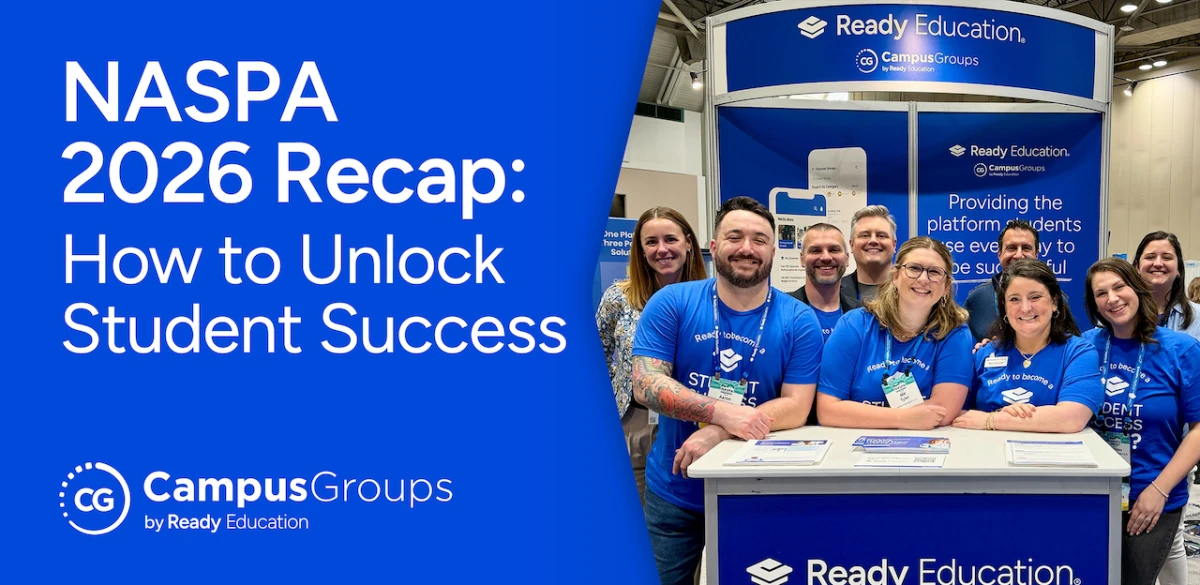
The Ready Education team had an incredible few days at NASPA 2026. From reconnecting with familiar faces to meeting new ones, the energy across the student affairs community was clear.
Across conversations, one theme stood out: how institutions can better support student success in a changing landscape.
First-generation student success, data-driven decision-making, and advancing access through structural change weren’t just conference themes, they shaped many of the discussions we had.
Engagement Is Evolving and Harder to Drive
One of the most consistent challenges we heard was declining student engagement. Institutions are seeing lower participation and relying more on incentives to drive involvement.
But this isn’t just a tooling issue. It reflects a broader shift in how students connect with campus.
As Nora Kearney shared, “Institutions are rethinking how they create meaningful opportunities for connection. It’s no longer enough to simply offer activities, engagement needs to be intentional and visible.”
This came through in our session with the University of Missouri–Kansas City (UMKC). A welcoming online experience can foster belonging from day one. By centralizing opportunities and guiding students through checklists and targeted outreach, UMKC is helping students take those first steps toward engagement.
The Data Challenge: From Fragmentation to Action
If engagement is the goal, data is the foundation, but many institutions still struggle to make it usable.
Data remains fragmented across systems, teams, and departments. From student organizations to residence life and career services, institutions often lack a unified view of engagement.
In many cases, key processes like roster management are still handled through spreadsheets and email. This limits accuracy and makes meaningful insights harder to generate.
As MK Tyler noted, “The challenge isn’t collecting data. It’s connecting it in a way that helps institutions understand what’s actually driving student success.”
This was a central theme in our session with Columbia University School of Professional Studies. With growing budget pressures, institutions must clearly demonstrate program impact, and that starts with clean, accessible data.
Connecting the Dots Across the Student Experience
A clear shift at NASPA was how institutions view engagement, not as isolated activities, but as a connected student journey.
From residence life to career development, schools are working to bring together the many touchpoints that shape the student experience. Tracks, checklists, and badges are gaining traction as tools to guide students from onboarding through graduation and beyond.
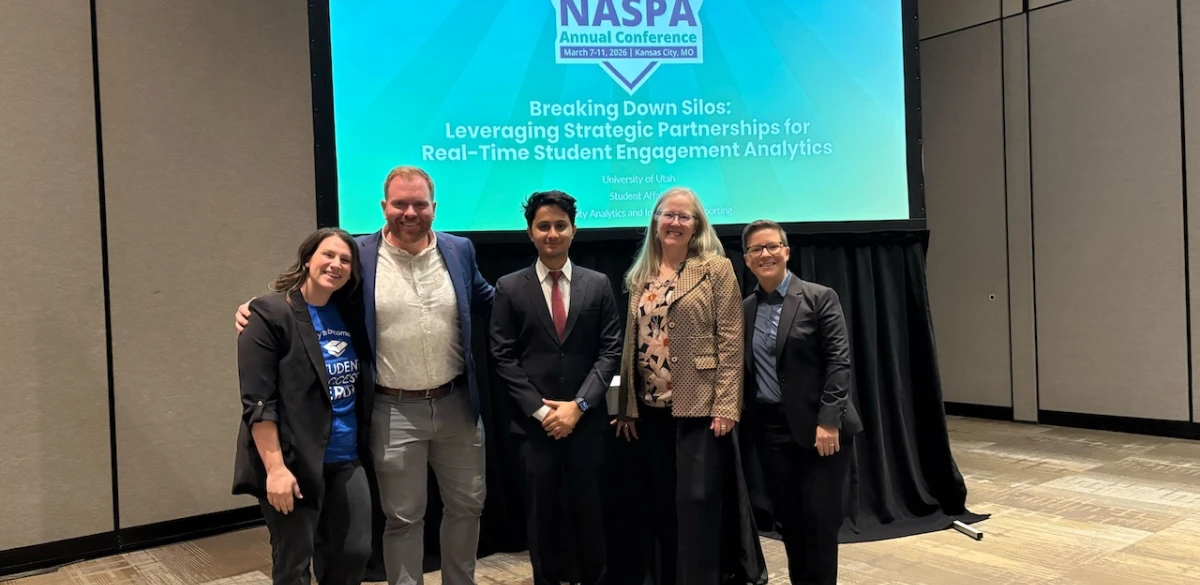
This was reinforced in our session with the University of Utah, which focused on breaking down silos through partnerships and real-time analytics. By connecting data and teams, institutions gain a clearer view of the student journey, and where support is needed.
Making Engagement Measurable
A major theme at NASPA was the shift toward measurable engagement.
Institutions are looking beyond participation metrics to understand how engagement drives retention, belonging, and long-term success. This requires combining behavioral insights—clicks, navigation patterns, usage data—with co-curricular engagement into a single view.
With that visibility, institutions can identify disengaged students earlier, make better decisions, and demonstrate impact to leadership.
As Nora Kearney explained, “When engagement data is visible and connected, it becomes a powerful tool for both student support and institutional strategy.”
That impact is already being seen by institutions using CampusGroups:
“Having all the information centralized—events, student organizations, community service hours, and more—in one hub is amazing. CampusGroups has been a staple for our first years. The platform has the social media feel students are looking for, so adoption has been smooth,” explained one of our campus partners.
Looking Ahead
The conversation is shifting from collecting data to using it, and from offering opportunities to guiding student journeys.
Institutions are now exploring how AI can build on this foundation. It can surface insights faster, personalize the student experience, and identify patterns that might otherwise go unnoticed.
The goal remains the same: to create more connected, intentional experiences that support every student’s success.
Let’s Keep the Conversation Going
Thank you to everyone who joined our sessions, connected with us, and shared their perspectives at NASPA 2026.
If there’s one takeaway, it’s this: student engagement is no longer just about participation, it’s about impact.
If you’re exploring how to better connect engagement, data, and student success, learn more about CampusGroups:
👉 www.readyeducation.com/campusgroups